
What Fully Diluted Shares Are and How to Calculate

Below is a simple example of how to calculate diluted EPS for a company without any preferred shares. This means that the company has 20 million implied shares outstanding, since $1 billion divided by $50 equals 20 million. Stock prices change constantly, making it difficult to keep track of the cost basis of shares acquired over time. Among investors, it is most relevant to those who compile a position in a stock over a long period of time, buying on the dips and holding the shares. It’s essential to keep in mind that preferred dividends can have a significant impact on the diluted EPS calculation, so make sure to include this step in your calculations.
WHAT ARE SHARES OUTSTANDING AND HOW IT IS DIFFERENT FROM WEIGHTED AVERAGE SHARES OUTSTANDING?
A stock split is an action taken by a company to divide its existing shares into multiple shares. Although the number of shares outstanding increases, the total dollar value of the shares remains the same compared to pre-split amounts, because the split does not add any real value. The intrinsic value of the company doesn’t change, but the split can affect some of the stock’s metrics, including its share price. But the concept of outstanding shares is a bit more complicated than it seems. The number of shares outstanding changes over time, sometimes dramatically, which can impact the calculation for a reporting period. At any given point, instruments like warrants and stock options must be accounted for as well.
- The countries’ regulators must report both basic earnings per share and diluted earnings per share.
- Overall, the number of shares outstanding, the metrics you can calculate from it, and related metrics — like the float — provide key insights to investors.
- Calculating diluted shares outstanding provides a complete picture of a company’s potential equity, essential for valuation and investment decisions.
- This is the foundation of any discussion about shares, including implied shares outstanding.
- These shares are not considered outstanding because they are not held by public or institutional investors.
- A company’s market capitalization is the current market value of all of its outstanding shares.
- Floating shares are calculated by subtracting outstanding and restricted shares from the total number of shares.
Shares outstanding vs float
- A company issues outstanding shares when it decides to raise funds by selling ownership in the company to investors.
- Imagine a situation where the company exercises a share buyback at the end of the year.
- A company must disclose the total number of outstanding shares since it is an essential statistic for investors and analysts to evaluate the performance and financial health of the company.
- It also has 10 million stock options outstanding with an exercise price of $5.
- Investors should be aware of the restricted potential for capital appreciation and the possibility of a price discount when the shares are redeemed.
Shares outstanding are used bookkeeping to determine a company’s market capitalization, i.e. the total value of a company’s equity, or equity value. Two different ways to analyze a company through its shares outstanding are earnings per share (EPS) and cash flow per share (CFPS). However, due to the fluctuations in share counts between reporting periods, the figure is typically expressed as a weighted average. The next step is to assume those securities are converted, the company receives the cash, and the number of shares outstanding goes up. Below is the snapshot of the shareholder’s equity section for the company AK Steel.
Why Do Investors and Analysts Calculate Diluted EPS?
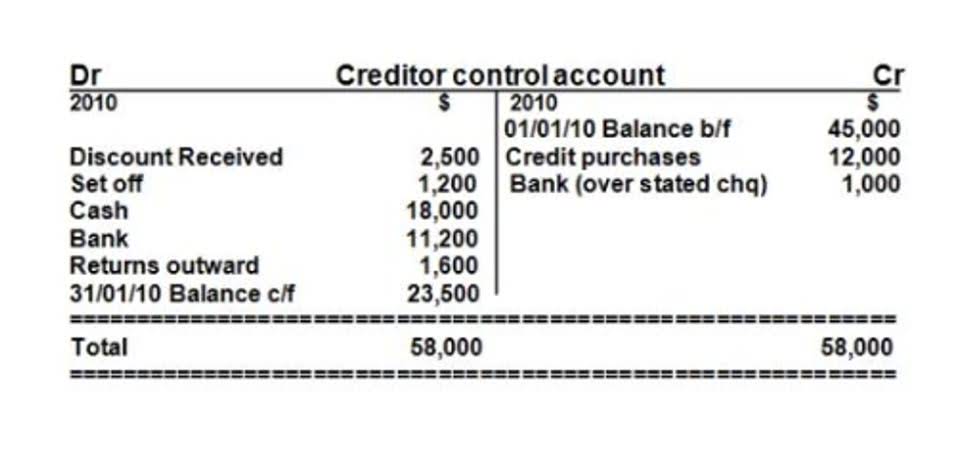
Outstanding shares work in the same manner that when a company decides to issue stock, it Retail Accounting produces new shares that investors can buy and sell. These shares are sold in an initial public offering (IPO) or later secondary offers. The shares become outstanding and can be traded on the open market when sold.
- This gives the most inclusive picture of a company’s potential share capital, providing the maximum possible number of shares that could be in circulation.
- Next, look in the line item for common stock, which is the main class of stock that is issued to investors.
- Stock options will be exercised; restricted stock may vest after executives hit certain targets.
- Outstanding shares represent a company’s shares that are held by investors, whether they’re individual, institutional, or insiders.
- Treasury shares are the portion of shares that a company keeps in its own treasury.
- Redeemable shares give an option to the company to repurchase its own stock if it needs to reduce the number of outstanding shares or change its capital structure.
- After all, there are many other uses the company could find for that capital, such as for acquisitions and capital expenditures (CAPEX), paying down debt, or simply retaining it as cash.
Basic earnings per share is calculated by taking the total net income from the period and dividing it by the weighted average shares outstanding during the period. The first formula uses total outstanding shares to calculate EPS, but in practice, analysts may use the weighted average shares outstanding when calculating the denominator. Since outstanding shares can change over time, analysts often use last period shares outstanding. Shares outstanding include shares owned by retail and institutional investors and restricted shares held by company officials and employees.

How to Calculate Shares Outstanding: A Step-by-Step Guide
For instance, a 2-for-1 stock split reduces the price of the stock by 50%, but also increases the number of shares outstanding by 2x. These include changes that take place because of stock splits and reverse stock splits. There are also considerations for a company’s outstanding shares if they’re blue chips. Enter relevant share counts, including any treasury stock, into the calculator to determine the common stock outstanding. Outstanding shares represent the number of a company’s shares that are traded on the secondary market and, therefore, are available to investors.
For instance, a company with 50 million shares outstanding trading at $20 per share has a market capitalization of $1 billion. A Share Buyback occurs when a company uses cash to repurchase its own stock, converting it into treasury stock. This action directly reduces the number of shares outstanding and can boost per-share metrics like Earnings Per Share (EPS). Shares outstanding alone are not a definitive indicator of company value; they must be evaluated alongside other factors like earnings and market price. However, they are critical for calculating market capitalization and EPS, which provide insights into a company’s value and financial performance. Understanding the distinction between these two is vital for assessing a shares outstanding formula company’s financial strategies and shareholder value.
Employee stock options, provided by companies as compensation to employees, can also dilute the existing shareholding pattern once exercised. A comprehensive equity view is provided by fully diluted shares, allowing for accurate company valuation and informed investment decisions. Some potentially convertible securities are anti-dilutive, meaning their inclusion in the EPS calculation would result in higher diluted EPS than the company’s basic EPS.
Leave a Reply
Want to join the discussion?Feel free to contribute!